
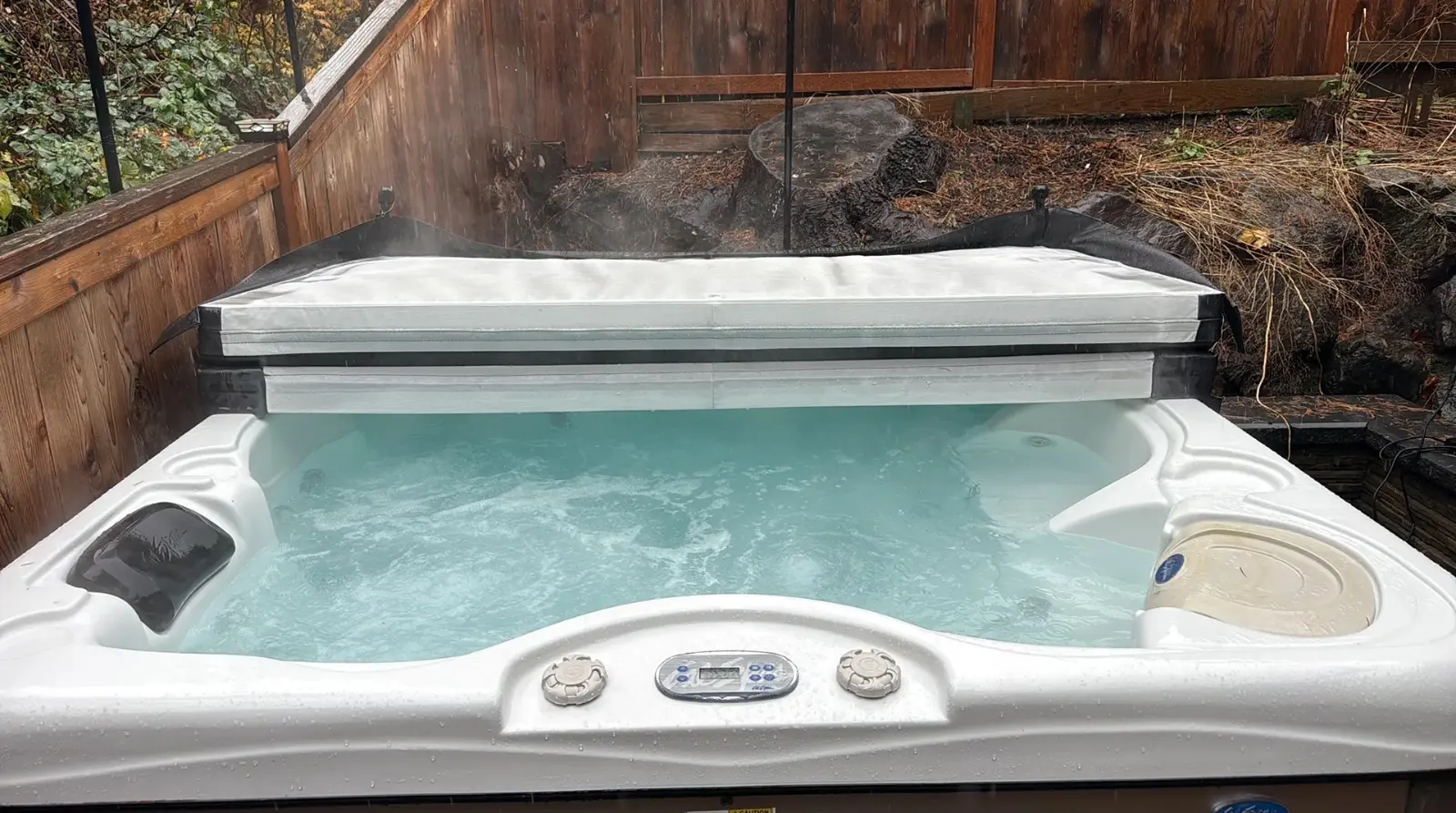
There are two ways to winterize a hot tub. Keep it running at a steady temperature under a tight cover, or shut it down completely: power off at the breaker, drain it, blow every drop of water out of the pump, heater, jets and pipes, then dry and cover the shell. For most Seattle owners we recommend keeping a healthy spa running, because a shutdown is only safe when no water is left anywhere in the plumbing.
Western Washington winters are mild most days. Most years still bring a handful of nights in the 20s, and every few years arctic air pours down from the Fraser River valley and keeps the region below freezing for days, as in late December 2021 and mid January 2024. Add the windstorms that cut power for a day or more, and those are the nights when a half drained spa cracks a pump housing or a tub without power freezes in the lines.
Should you keep your hot tub running all winter?
For most owners, yes. A running spa keeps warm water moving through the plumbing, and most modern control packs have a freeze protection mode that starts the pump when the sensors read too cold. As long as the power stays on and the cover seals, the water will not freeze.
Winter is also the best soaking season in the Pacific Northwest. Keep the water balanced, rinse the filter every few weeks and check the cover for water logging, since a soggy cover lets heat escape and runs up the power bill. Going away for a couple of weeks? Drop the set point 5 to 10 degrees instead of turning the tub off.
If a windstorm knocks the power out during a cold snap, keep the cover closed and strapped. A covered tub full of warm water holds its heat for a good while. If the outage drags on past a day with temperatures below freezing, call us before you restart anything.
When should you shut a hot tub down for winter?
Shut it down if you will be away for months, if the tub is at a cabin or second home where nobody would notice an outage, or if it is old and you do not trust the freeze protection. A tub that loses power in a cold snap with water still in the lines is the classic freeze damage call we get every winter.
A shutdown is all or nothing. Draining the shell is the easy part. The water hiding in the pump, heater, jets and low spots of the plumbing is what freezes and splits things.
How do you winterize a hot tub step by step?
1. Turn off power at the breaker, not just the topside panel. 2. Drain the tub through the drain spigot or with a submersible pump (see how to drain a hot tub). 3. Remove the filters, clean them and store them indoors, dry. 4. Open the equipment panel and loosen the unions on the pump and heater so they drain. 5. Put a wet and dry shop vac on blow and push air through each jet, the filter housing and the drain, then switch it to suction and pull water from the low points until nothing more comes out. 6. Towel the shell and footwell dry and leave the drain open. 7. Close the cover and lock the straps so wind and rain stay out.
Some owners add antifreeze to the lines as a backup. Use only non toxic propylene glycol antifreeze made for RV and drinking water lines, never automotive antifreeze, and check your owner's manual first because some manufacturers say not to. Flush it out completely before the spring refill.
What does hot tub freeze damage look like?
After a cold snap, look for water pooling under the cabinet, a pump that hums but does not move water, or a heater that throws a flow or dry heater error even with a clean filter. Cracked unions and split heater housings are the usual finds. Small cracks may not show until the tub is refilled and running.
If you see any of that, turn the power off at the breaker and book a hot tub repair visit before you refill. Running a damaged pump or heater dry can turn a small fix into a replacement. Troubleshooting is a flat $199 visit, never hourly, and every repair is quoted as one flat written price before we start. Hot tub heater replacement starts at $699 and pump replacement at $849, and the rest of our starting prices are on the pricing page.
Can a pro winterize a hot tub for you?
Yes. A professional winterization covers a full drain, a blowout of every line, filter cleaning, an equipment check and a cover inspection, then a clean startup in spring. ASA winterizes and opens hot tubs in Seattle and 17 nearby cities, from Edmonds and Lynnwood down to Renton and across the Eastside, and we handle pool closings too. If you would rather keep soaking all winter, hot tub maintenance visits keep the water and cover in shape through the wet months.