
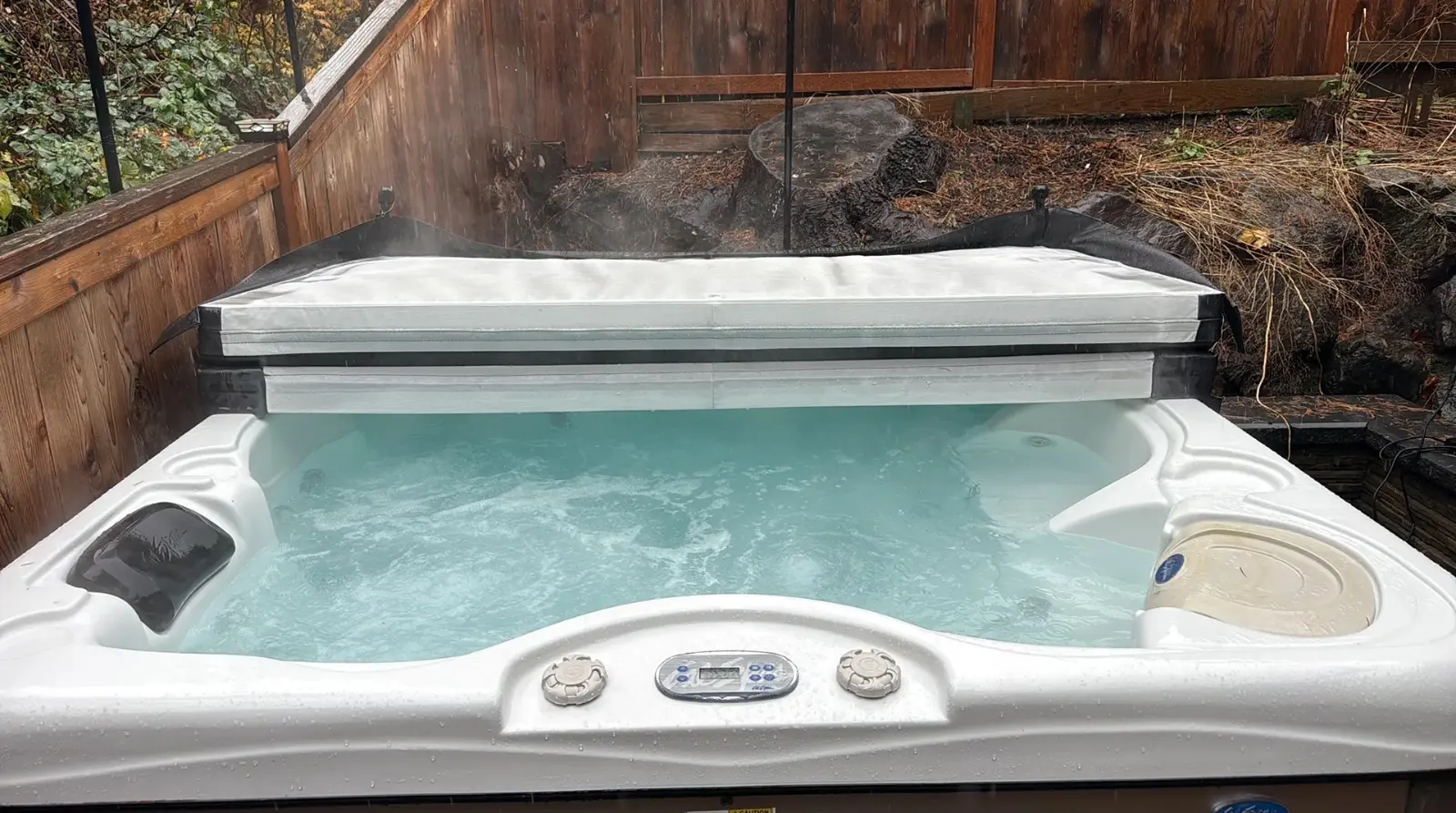
To drain a hot tub, shut the power off at the breaker, then run a garden hose from the drain spigot or drop a submersible pump into the footwell, and send the water to a sewer cleanout or a lawn that can soak it up. Once it is empty, clean the shell and filters, refill through the filter well and balance the water the same day. Most Seattle hot tubs need this every three to four months.
Why so often? Every soak leaves lotion, sweat and dissolved solids that sanitizer cannot break down. After a few months the water stops holding its chemistry. It foams, smells and burns through chlorine no matter how much you add. Fresh water gets you back to the CDC targets for hot tubs: 2 to 4 ppm free chlorine (or 4 to 6 ppm bromine) and a pH of 7.2 to 7.8.
How do you drain a hot tub with a garden hose?
Turn the spa off at the breaker first, not just at the topside panel. A pump or heater that kicks on with no water can burn out fast, and you do not want live power near you while you work.
1. Find the drain spigot, usually behind a small access panel near the bottom of the cabinet. 2. Screw on a garden hose and run it to where the water should go. 3. Open the drain valve, pull the cap or twist the spigot open, and let gravity do the work.
Gravity is slow. A 300 to 500 gallon spa takes a few hours through a garden hose, and the footwell never fully empties on its own. Finish the last few inches with a wet vac or a bucket and sponge.
How do you drain a hot tub fast, or one with no drain plug?
Use a submersible utility pump. Set it in the deepest part of the footwell, connect a hose to the outlet and plug it into a GFCI protected outlet well away from the water. Most spas empty in under an hour this way, and it works on tubs with no drain spigot at all, including most inflatables. Stay close, because a utility pump that runs dry can overheat.
Pull the filters out before you start so the filter well empties too. A shop vac picks up whatever the pump leaves behind.
Where can you drain hot tub water in Seattle?
Into the sanitary sewer, or onto your own lawn once the sanitizer is gone. Never into the street or a storm drain. Across much of Seattle, storm drains run straight to creeks, Lake Washington or Puget Sound with no treatment, and chlorine or bromine harms the fish there.
The sewer is the safe bet: a cleanout in the yard, or an indoor floor drain or laundry sink that ties into the sewer. For the lawn route, stop adding sanitizer a few days ahead and leave the cover open so the level drops close to zero. Test it before you drain. Then keep moving the hose. From October through spring the ground here is already soaked, so water puddles quickly and can run onto the sidewalk or a neighbor's yard.
What should you clean while the hot tub is empty?
Start with the waterline ring. Wipe the shell with a spa surface cleaner made for acrylic. Household cleaners leave a residue that turns into foam after the refill. Hose off the filters, and soak them in filter cleaner if they have not had a deep clean in a while. Most cartridges need replacing every one to two years.
Look at the cover while you are at it. A heavy, waterlogged cover loses heat fast and is worth replacing before winter. Check under the cabinet for wet spots too. A tub that loses water between changes needs a look, and our hot tub repair techs can track it down for a flat $199 troubleshooting visit, never hourly.
How do you refill a hot tub without an airlock?
Put the filters back and fill through the filter well. Water coming in from the filter side pushes air out of the plumbing ahead of it, which keeps the pump from airlocking. Fill to the line on the skimmer, or a few inches above the highest jet. If your water is hard or comes from a well, a hose end prefilter catches metals and sediment.
Turn the breaker back on and let it circulate. If the pump hums but nothing moves, it is airlocked. Loosen the union nut on the pump discharge until water spits out, then snug it back up. After that, test and balance: total alkalinity first, then pH, then sanitizer.
Heating takes longer than people expect. Tap water here runs in the 40s in winter, and a 240 volt spa heater with the cover on gains roughly 3 to 6 degrees an hour, so getting to soaking temperature can take most of a day. Start a winter water change in the morning.
How often should you change hot tub water?
Every three to four months for most homes. For a closer number, divide the spa's gallons by 3, then by the average number of people using it each day. That gives you days between changes. A 400 gallon tub used by two people a day comes out to about 67 days.
Change it sooner if the water stays cloudy after a shock or foam keeps coming back. A tub nobody uses still needs fresh water every three to four months, because dissolved solids keep building up. In winter, pick a day above freezing. If you would rather shut the tub down for the season, follow our hot tub winterizing guide. Or skip the job entirely and let our hot tub maintenance crew handle water changes.