
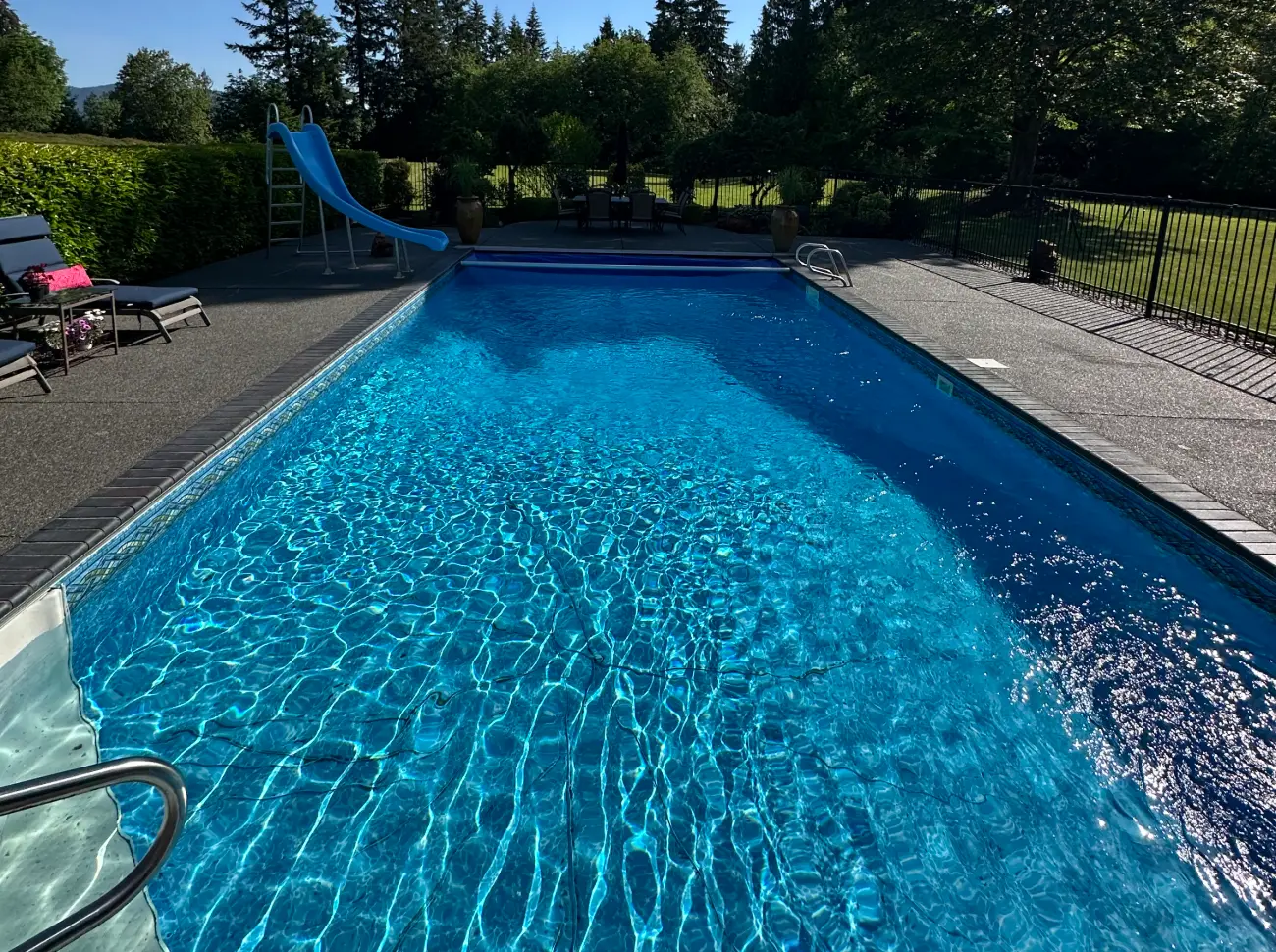
To close a pool for winter in Seattle, balance and shock the water, clean the pool and filter, lower the water below the skimmer, blow out and plug every line, drain the pump, filter and heater, add a winter algaecide and lock down a cover. Most Puget Sound pools get closed in October, before the first freeze.
Some owners skip all of that and run the pool through the winter instead. Our winters are mild enough for that to work, as long as the freeze protection works. What never works is switching the pump off and leaving water sitting in the pipes.
When should you close a pool in Seattle?
Close it once the water is below about 65°F and nobody is swimming. For most Seattle and Eastside pools that means late September through October. Up on the Sammamish Plateau or in the Issaquah foothills, frost comes earlier, so close sooner.
Early beats late. Algae slows way down once the water drops under 60°F, so a pool closed clean in October tends to open clean in spring. Wait for the first cold snap in November and you end up winterizing in a hurry, in the rain.
How do you close a pool step by step?
1. Balance the water a few days ahead. Aim for pH 7.2 to 7.6, total alkalinity 80 to 120 ppm and calcium hardness in the range your plaster, vinyl or fiberglass needs.
2. Clean and shock. Brush, skim and vacuum, then shock. Wait until chlorine falls back to about 3 ppm before adding algaecide or covering the pool, because high chlorine breaks down the algaecide and can bleach a vinyl liner.
3. Clean the filter. Backwash a sand or DE filter, or hose off the cartridges, then open the air relief and pull the filter's drain plug.
4. Lower the water. Take it below the skimmer mouth, usually 4 to 6 inches down for a mesh safety cover. Some pools with a skimmer plug or freeze guard stay higher, so check what your cover maker says. Never drain an in-ground pool.
5. Blow out the lines. Blow the skimmer, return, cleaner and main drain lines with a pool blower or shop vac until air bubbles come out the other end, then plug them. Close the main drain valve while it is still bubbling so the line stays air locked.
6. Drain the equipment. Pull the drain plugs on the pump, filter, heater and any chlorinator, and keep them in the pump basket so you find them in spring. Turn off the breakers and the gas to the heater. Pull a salt cell and store it indoors.
7. Add winter chemicals. Add a winterizing algaecide. Pool antifreeze in the plumbing is cheap insurance against a hard freeze, and it must be propylene glycol made for pools, never car antifreeze.
8. Cover it tight. A mesh safety cover lets rain through, so after a wet Seattle winter the water may need pumping back down. A solid cover holds rain on top and needs a cover pump.
The blowout matters more than any other step. One low spot holding water in a return line can crack a pipe under the deck, and fixing that means cutting concrete.
Can you keep a pool running all winter in Seattle?
Yes, and lots of Seattle owners do, because our hard freezes are short. Run the pump on a reduced daily schedule, let the automation's freeze protection switch it on when the air drops to around 36 to 38°F, and check chlorine and pH every couple of weeks. The pool stays clean and spring opening is easy.
The weak spot is power. A windstorm that knocks out power during a cold snap shuts the freeze protection off with it. If you keep the pool running, test the freeze sensor in October and check the pump after every outage.
What happens if you don't winterize a pool?
Water left in the plumbing can freeze and crack pipes, the pump housing or the heater. Without circulation the pool goes green by spring and leaves stain the plaster. Opening day turns into a green pool cleanup, sometimes with a pump repair on top.
A proper closing costs less than either. Our pool opening and closing service is one flat price, quoted in writing before we start. Call (206) 202-1454 and we'll tell you whether closing or a winter run schedule makes more sense for your pool.