
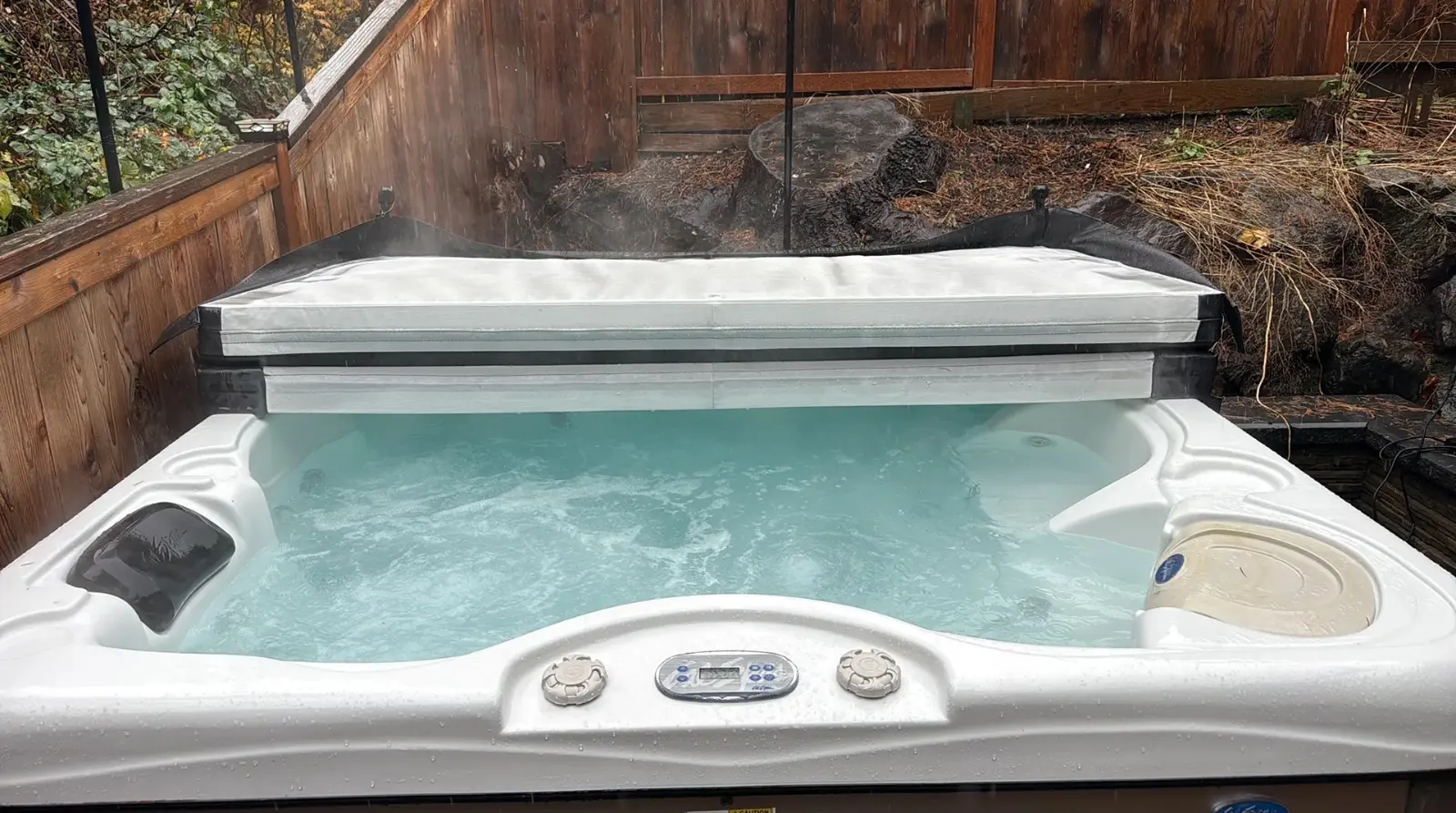
Hot tub water turns cloudy or green when the sanitizer runs low, the filter is clogged or the pH and alkalinity drift high. Cloudy water is usually tiny particles the filter can't catch and the chlorine can't burn off. Green water usually means algae has started to grow because there wasn't enough chlorine or bromine to stop it. At ASA Pools & Hot Tubs we see both most often in Seattle spas that sat covered for a few weeks over the fall without a test.
The fix is the same order every time: test, balance pH and alkalinity, shock, clean or replace the filter, and run the jets. The CDC recommends keeping free chlorine at 3 to 10 ppm, or bromine at 4 to 8 ppm, and pH at 7.2 to 7.8 in a hot tub. Water that stays in those ranges rarely clouds up.
Why is my hot tub water cloudy?
Cloudiness comes from things floating in the water that are too small to see one by one. Body oils, lotion, sweat, hair products and dead skin pile up fast in a few hundred gallons at 100 degrees. If the sanitizer level is low, nothing breaks them down. If the filter is caked, nothing pulls them out.
High pH and high alkalinity are the other common cause. Above about pH 7.8, calcium starts to come out of the water as fine white specks, which reads as milky or hazy water, and chlorine works much less well. If your strips show high alkalinity, bring it down first with our guide to lowering hot tub alkalinity, then come back to the steps below.
Why is my hot tub water green?
Green and cloudy water, often with a slick feel on the shell, is algae. It grows when sanitizer hits zero, even for a day or two. A spa left covered in a cold spell with the pump on a short cycle is the classic case. Green water with a musty or swampy smell is past the point of a quick shock.
Green but clear water is a different problem. A green or teal tint in water that is otherwise clear usually means dissolved copper. It comes from a copper based mineral sanitizer, an algaecide with copper in it, or a heater that corroded because the water ran acidic for a while. Seattle tap water is soft and low in calcium, so tubs here can turn corrosive faster than in hard water areas if pH and alkalinity aren't kept up. Shocking won't fix a copper tint. A metal sequestrant and a partial drain will, and a look at the heater is worth it.
How do you fix cloudy or green hot tub water?
1. Test pH, total alkalinity and sanitizer with fresh strips or a drop kit. 2. Bring alkalinity to 80 to 120 ppm and pH to 7.2 to 7.8 before anything else, because shock works poorly at high pH. 3. Shock with the cover off and the jets on, using the dose on the label for your tub size. Non chlorine shock is fine for routine cloudiness. Green water needs chlorine shock. 4. Pull the filter and rinse it with a hose, top to bottom between every pleat. If it is more than about a year old or the pleats are flattened, replace it. 5. Run the jets for a few hours, then retest.
Most cloudy tubs clear in a few hours to a day. Light algae usually clears in a day or two with a second shock. If the water is still cloudy after shock and a clean filter, a clarifier helps the filter catch the fine particles. Give it a day, then rinse the filter again.
Why is my hot tub water cloudy after shocking?
Some haze right after shock is normal. The shock is breaking down what was in the water, and it can take a few hours of filtration to clear. If it is still cloudy the next day, the usual causes are a dirty filter, pH that was too high when you shocked, or not enough shock for the load in the water.
Chlorine shock also raises pH a little. Retest the next morning, adjust pH back into range and run the jets. If the water turned yellow or brown after shock instead of cloudy, the shock reacted with metals in the water. Use a metal sequestrant and plan a water change.
When should you drain the hot tub instead of treating it?
Drain and refill if the water is more than three or four months old, if it is green and slimy, if it foams heavily as soon as the jets come on, or if two rounds of shock and a clean filter haven't cleared it. Old water is full of dissolved solids that no chemical removes, and treating it costs more than fresh water. With algae, flush the lines with a spa line cleaner before you drain so the growth inside the plumbing doesn't reseed the new fill.
Our guide to draining a hot tub covers where the water can go and how to refill without an airlock. In a Seattle winter, drain and refill on a dry day above freezing and get the heater running again the same day.
How do you keep hot tub water from turning cloudy again?
Test two or three times a week and after any big soak. Keep sanitizer in range all the time, not just after a shock. Rinse the filter every two to four weeks, and shower before you get in so less lotion and soap ends up in the water. Fall and winter in the Northwest bring fir needles and leaves under the cover edge, so check the water line and skimmer when you test.
If you would rather not chase the numbers, our hot tub maintenance visits cover testing, balancing, filter cleaning and water changes across Seattle and the Eastside.