
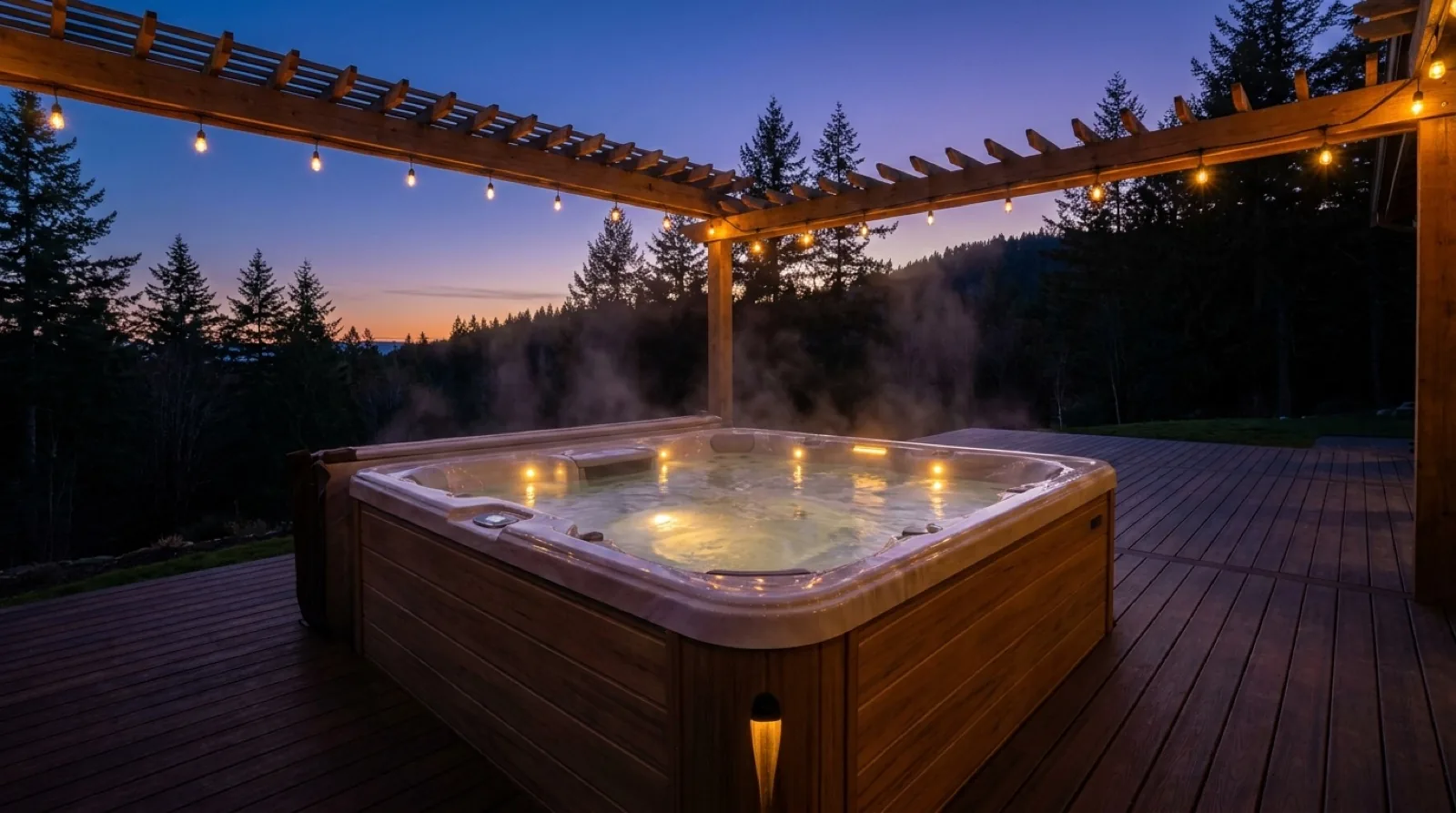
A modern, well insulated hot tub with a healthy cover typically uses about 3 to 7 kilowatt hours per day, which works out to roughly 100 to 200 kWh a month. Seattle enjoys some of the cheapest electricity in the country thanks to hydropower, generally in the range of 12 to 15 cents per kWh, so most owners here pay somewhere between $15 and $35 a month to run their spa.
An older tub with a waterlogged cover in a windy spot can cost two or three times that. The gap between an efficient spa and a neglected one is almost entirely about heat retention, and that is good news, because heat retention is fixable.
What actually uses the power?
The heater is the big draw, typically 1.5 to 6 kilowatts when running, but it only runs when the water needs heat. The circulation pump sips power around the clock, and jets add a burst while you soak. In practice your bill is mostly determined by how much heat escapes between soaks, because every lost degree is a degree the heater must buy back.
That is why two identical tubs can have wildly different bills. One has a tight fitting cover in good shape, the other has a heavy, water soaked cover that leaks heat all night into a Puget Sound drizzle.
Does a hot tub raise your electric bill a lot?
Less than most people fear, at least in Seattle. Adding $20 or $30 a month is comparable to a couple of streaming subscriptions, and far below what owners in cold, expensive power markets pay. The horror stories you read online usually involve electric rates double ours plus a subzero winter.
Our mild winters and cheap hydro power make Western Washington one of the most affordable places in the country to own a hot tub. The climate that keeps our summers gentle also keeps your spa from fighting arctic air.
Is it cheaper to leave a hot tub on all the time?
For regular users, yes. Water is slow to heat and slow to cool, so holding a steady 100 to 102 degrees costs less than repeatedly reheating from cold, as long as your cover is doing its job. If you soak less than once a week, a setback of 5 to 10 degrees between uses saves a little without risking a long reheat.
The exception is a seasonal shutdown. If the tub will sit unused for months, a proper winterization with drained lines beats paying to keep water hot for nobody.
How to lower your hot tub's electricity cost
First, the cover. If yours is heavy, cracked or older than about 5 years, it is likely saturated and leaking heat, and replacing it is the single best efficiency upgrade a spa owner can make. We measure and fit replacement covers as part of our service work.
Second, keep the filter clean, because a clogged filter makes the pump and heater work harder. Third, check for a worn heater or failing thermostat if your bill creeps up without explanation, since a struggling heater runs longer to do the same job. A seasonal maintenance visit catches all three before they show up on your bill.